.svg)



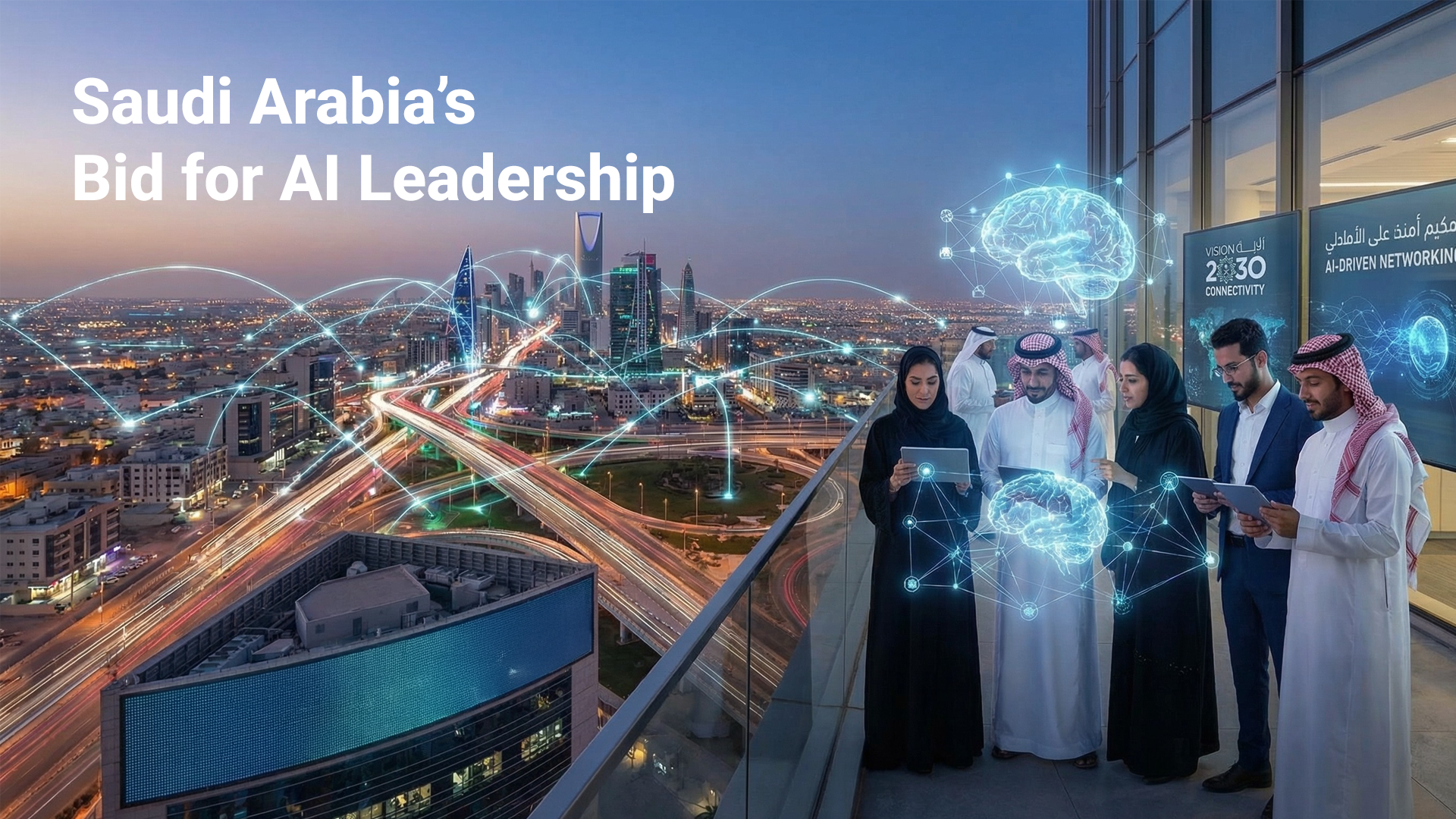
Saudi Arabia’s Vision 2030 is not just accelerating digital transformation. It is fundamentally reshaping how infrastructure must operate. As smart cities expand, enterprises digitize operations, and giga projects move from blueprint to execution, network demands are rising sharply across the Kingdom.
Campuses are expanding, industrial corridors are being digitized, telecom infrastructure is scaling rapidly, and high-density urban zones are handling unprecedented traffic volumes
With this expansion comes a new set of pressures.
Organizations are dealing with network congestion in dense environments, with infrastructure spread across multiple sites, limited end-to-end visibility, and increasing operational strain from manual processes. At the same time, customer expectations for speed, reliability, and seamless experiences continue to grow.
Traditional networks were built for stability, but today stability alone is not enough. When issues are detected only after disruption, downtime and performance degradation become unavoidable. In an economy that depends on real-time digital services, reactive infrastructure creates unnecessary risk.
Saudi Arabia’s ambitions require networks that anticipate change, adapt dynamically, and optimize performance continuously. This is where AI-Driven Networks come into play.
The Opportunity: Unlocking New Possibilities with AI-Driven Networks
While network complexity introduces operational challenges, it also opens the door to strategic advantage.
AI-enabled networking shifts the focus from fixing problems to preventing them. Instead of reacting to outages, organizations can identify performance patterns, that detect anomalies early, and adjust in real time.
Recent industry insights reinforce this shift. A Cisco-commissioned study shows that more than 35% of technology partners in Saudi Arabia expect between 76 and 100% of their future revenue to come from AI technologies. In addition, half of respondents forecast over 75% growth in AI-related demand over the next four to five years.
AI Networking Growth in Saudi Arabia
Source: Cisco Partner Research
These trends highlight why AI-Driven Networks and cloud-managed networking are becoming critical for supporting scalable digital infrastructure aligned with Saudi Vision 2030.
This signals something important. AI is no longer a supplementary capability. It is becoming central to how digital infrastructure will evolve in the Kingdom.
For ISPs, system integrators, and enterprise IT leaders, intelligent networking is moving from innovation to necessity.
Key Learning: How AI-Driven Networks Are Transforming Enterprise Networking in Saudi Arabia
As AI adoption grows across Saudi Arabia, practical lessons are emerging from early deployments and transformation initiatives.
The first is that prevention carries more value than troubleshooting. AI systems analyze historical and live performance data to detect subtle warning signs before failures occur. This significantly improves uptime and reduces disruption.
The second lesson is that traffic patterns cannot be static. Demand fluctuates constantly, especially in high-density and event-driven environments. Machine learning allows networks to dynamically route traffic and allocate bandwidth based on real-time conditions.
The third learning is that distributed infrastructure demands centralized intelligence. As organizations operate across campuses, branches, and industrial zones, visibility becomes fragmented. Cloud-based management platforms restore consistency by providing unified control across locations.
Finally, customer experience must be monitored proactively. Latency, packet loss, and throughput are no longer just technical metrics. They are direct indicators of business performance. AI enables continuous monitoring so that performance degradation is addressed before users notice it.
The broader takeaway is straightforward. In a Vision 2030-driven economy, intelligence cannot sit outside the network. It must be embedded within it.
The Solution: AI-Driven Cloud-Managed Networking for Saudi Enterprises
To translate AI-driven networking from strategy into execution, organizations need platforms that are scalable, compliant, and purpose-built for distributed environments.
IO by HFCL delivers an intelligent networking suite designed to support Saudi Arabia’s evolving digital infrastructure landscape. The portfolio enables enterprises, ISPs, and system integrators to deploy, manage, and optimize networks at scale while maintaining operational control and visibility.
Cloud-Managed Wi-Fi Solutions
For enterprises operating across campuses, hospitality environments, malls, public venues, and multi-branch networks, cloud-managed Wi-Fi plays a critical role in maintaining consistent performance.
IO by HFCL’s cloud-managed Wi-Fi solutions provide:
- Centralized control across multiple locations
- AI-enabled insights into user behavior and traffic patterns
- Automated radio frequency optimization
- Seamless onboarding and device profiling
- Detailed analytics for performance monitoring and security management
This approach reduces operational burden while ensuring high service reliability across distributed environments.
Learn more: https://io.hfcl.com/ksa/cloud-managed-wifi-solutions
AI-Powered Network Management and Analytics
Beyond wireless connectivity, AI-driven monitoring and automation are essential for maintaining performance at scale.
IO by HFCL’s intelligent network management capabilities help organizations:
- Track performance trends across devices, applications, and sites
- Predict bottlenecks and potential infrastructure failures
- Automate configuration consistency and compliance
- Provide actionable dashboards for IT leadership
Instead of reacting to incidents, IT teams gain the ability to anticipate issues, optimize resources, and maintain consistent service quality across complex environments.
Conclusion: AI-Driven Networks Enabling Saudi Vision 2030 Intelligent Connectivity
Saudi Arabia’s digital ambitions are redefining what networks are expected to deliver. Vision 2030 initiatives, smart city ecosystems, and enterprise modernization programs all depend on infrastructure that is responsive, scalable, and intelligent.
AI-driven networking enables organizations to manage complexity without sacrificing performance. It supports continuous optimization rather than periodic correction.
For many Saudi enterprises, the conversation has already shifted. The question is no longer whether AI belongs in the network. The focus is now on how quickly intelligent, cloud-managed architecture can be implemented to support long-term strategic goals.
The next chapter of connectivity in the Kingdom will be shaped by networks that learn from data, adapt to demand, and optimize themselves in real time.





.svg)